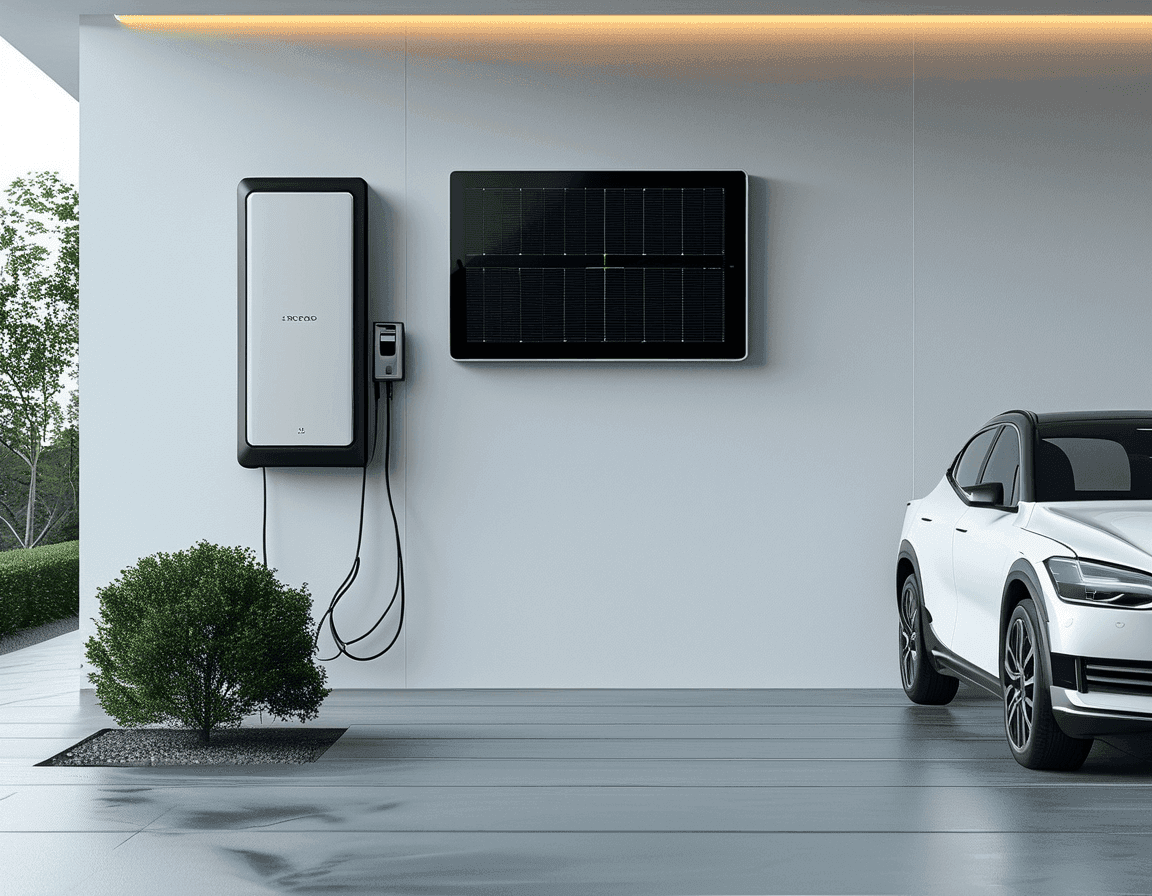
Tirana Battery Energy Storage (BESS) Market Analysis: 500kWh/125kW Industrial Configuration Guide
Summary
Tirana’s commercial and light-industrial power users face rising midday PV export limits, summer cooling peaks, and grid quality constraints; a 500kWh/125kW BESS with 95% round-trip efficiency, 90% DoD, and 8,000-cycle life fits typical solar self-consumption applications in Albania’s urban load profile.
Key Takeaways
- A typical Tirana industrial BESS recommendation is 500kWh / 125kW in 1× 20ft container, matching the 500kWh–2MWh form factor class for factory and commercial sites.
- According to the World Bank (2022), Albania’s urban population exceeds 60%, and Tirana is the country’s largest load center, which increases the relevance of behind-the-meter storage for commercial facilities.
- According to NREL (2023), lithium-ion BESS used for daily cycling commonly targets 1 cycle/day applications, aligning with this guide’s solar self-consumption + surplus storage duty profile.
- The specified LFP system uses 95% round-trip efficiency, 90% DoD, 8,000 cycles, and 2.5%/year degradation, which supports a planning horizon of 15 years.
- A typical operating window at 85% daily depth of discharge provides about 425kWh usable energy per cycle, suitable for midday PV shifting into evening commercial demand.
- Standards alignment should include IEC 62619, UL 9540, and NFPA 855, with liquid cooling, aerosol fire suppression, BMS, PCS inverter, and step-up transformer included.
- According to IEA (2024), battery deployment is expanding globally as grids absorb more variable renewable generation; in Tirana, the same trend supports self-consumption and peak management on 0.4kV/20kV distribution interfaces.
- For Tirana sites with rooftop or ground-mounted PV, a typical 4-hour system at 125kW can reduce evening grid imports and improve on-site solar utilization without oversizing inverter export capacity.
Market Context for Tirana
Tirana is Albania’s main commercial and administrative center, and its concentration of offices, logistics sites, retail buildings, and light industry makes behind-the-meter storage more relevant here than in smaller municipalities. According to INSTAT (2023), Tirana County remains the country’s most populated region, while the World Bank (2022) reports Albania is now predominantly urban, with more than 60% of the population living in urban areas. For BESS sizing, that matters because dense urban demand tends to produce steeper afternoon and evening load ramps on commercial feeders.
Albania’s power system is unusual in Europe because hydropower has historically dominated generation, but this also creates seasonal variability and import dependence in dry years. According to the International Energy Agency (IEA) (2024), Albania continues to diversify supply with solar additions and grid modernization. In practical terms, Tirana facilities adding rooftop PV increasingly need storage to keep more generation on site rather than exporting surplus during low-value midday periods.
The local grid context also supports moderate-scale industrial storage rather than residential-scale cabinets for many business users. Albania’s distribution system commonly interfaces commercial customers at 0.4kV low voltage and larger users through 20kV medium-voltage networks under national distribution planning. According to OSHEE Group and Albanian energy planning documents, urban load growth and distributed generation integration are pushing more attention toward voltage stability, transformer loading, and peak demand management in major cities such as Tirana.
Climate also influences BESS design. Tirana has hot summers, with July and August daytime temperatures often above 30°C, and winter humidity can be high. According to Climate-Data.org and World Bank Climate Portal data, the city’s Mediterranean-influenced climate requires thermal management that is more stable than basic forced-air cooling for daily-cycling battery systems. For this reason, liquid cooling with glycol is a better fit than passive or simplified ventilation for a 500kWh industrial unit.
Battery storage in Tirana is therefore best analyzed as an on-site energy management asset rather than only a backup system. According to IRENA (2023), storage improves renewable integration by shifting energy from periods of oversupply to periods of demand. That directly matches Tirana’s commercial solar profile, where PV output peaks around 11:00-15:00 while building demand often remains elevated into the 17:00-22:00 period.
As the IEA states, "Battery storage is a key flexibility option in power systems with growing shares of variable renewables." That statement is directly relevant to Tirana because Albanian businesses are adding distributed solar while still facing network and tariff constraints. NREL also notes, "Energy storage can reduce demand charges, increase photovoltaic self-consumption, and provide resilience benefits," which aligns with the economics of a 500kWh/125kW BESS for commercial users in the city.
Recommended Technical Configuration
A typical Tirana commercial or light-industrial deployment would use a 500kWh / 125kW Battery Energy Storage (BESS) in 1× 20ft container, designed for 1 cycle/day solar self-consumption and surplus storage on a medium-sized PV site.
This size class is the correct fit because the product brief places 500kWh–2MWh systems in the factory / commercial category using a standard 20ft container, while smaller 100-500kWh systems are outdoor cabinets and would be undersized or too fragmented for many Tirana industrial loads. A 125kW PCS also creates a balanced 4-hour duration system, which is suitable when midday solar surplus needs to be shifted into late-afternoon and evening consumption.
A typical 1-unit deployment in this profile would consist of one containerized LFP battery block, one PCS inverter, one step-up transformer, integrated BMS, glycol-based liquid cooling, and aerosol fire suppression. For Tirana facilities with rooftop PV in the 150kWp to 350kWp range, this BESS size would often be appropriate where daytime export is constrained or where evening consumption remains high after solar output falls.
The chemistry choice should remain LFP rather than NMC for this use case. LFP is preferred for daily cycling because thermal stability and long cycle life are strong priorities under 1 cycle/day operation. With 8,000 cycles and 90% DoD, the system can support long-duration commercial use over a 15-year warranty period, assuming proper thermal control, commissioning, and maintenance.
Interconnection in Tirana would usually be arranged on the customer side of the meter at 400V three-phase, with transformer coordination based on site architecture and utility requirements. If the site operates through a dedicated MV transformer, the BESS can be coupled through the PCS and step-up transformer to support internal load shifting without requiring a utility-scale substation. This keeps the design aligned with the product’s industrial class rather than overcomplicating the project into a grid-scale configuration.
For SOLAR TODO, the practical recommendation is to position this system as a commercial PV optimization asset first, and as a resilience asset second. The primary mode here is solar-coupled self-consumption, not pure backup and not tariff-only peak shaving, although some peak reduction would still occur when the 125kW inverter discharges during the late-day demand window. Buyers reviewing Battery Energy Storage (BESS) options in Tirana should therefore focus on daily energy shifting, usable kWh, and interconnection design rather than headline container count.
Technical Specifications
The recommended Tirana configuration is a 500kWh / 125kW industrial LFP BESS in 1× 20ft container with 95% round-trip efficiency, 90% DoD, 8,000-cycle life, and compliance targets of IEC 62619, UL 9540, and NFPA 855.
- System type: Containerized Battery Energy Storage (BESS)
- Recommended application in Tirana: Industrial/commercial solar self-consumption + surplus storage
- Nominal energy capacity: 500kWh
- Power rating: 125kW
- Duration: 4 hours at rated power
- Form factor: 1× 20ft container
- Battery chemistry: LFP (Lithium Iron Phosphate)
- Round-trip efficiency: 95%
- Depth of discharge: 90% DoD
- Operating profile: 1 cycle/day at approximately 85% daily depth
- Usable daily shifted energy: approximately 425kWh/day under the stated cycling profile
- Cycle life: 8,000 cycles
- Expected degradation: 2.5%/year
- Warranty: 15 years
- Battery management: Integrated BMS with cell/string/system monitoring
- Thermal management: Liquid cooling (glycol)
- Fire protection: Aerosol fire suppression
- Power conversion: Integrated PCS inverter
- Grid interface: Step-up transformer included for site interconnection design
- Standards: IEC 62619, UL 9540, NFPA 855
- Recommended network context: 400V three-phase customer-side integration, with transformer coordination where required
According to IEC (2017), IEC 62619 covers safety requirements for secondary lithium cells and batteries for industrial applications. According to UL (2023), UL 9540 addresses energy storage system safety at the system level, while NFPA (2023) provides installation guidance on spacing, fire protection, and hazard mitigation under NFPA 855. For Tirana sites, these three references should be treated as baseline compliance documents during design review.
Implementation Approach
A typical Tirana BESS rollout would move through 5 phases over roughly 12-20 weeks, depending on grid approvals, civil readiness, and import logistics.
Phase 1 is site and load assessment. This usually includes 12 months of interval consumption data, PV production data if solar already exists, transformer capacity review, and a dispatch model based on 1 cycle/day. For a 500kWh / 125kW unit, the engineering team should verify that the site has enough midday surplus to charge at least 350-425kWh/day during high-production months.
Phase 2 is electrical design and permitting. This step covers single-line diagrams, protection coordination, EMS logic, transformer interface, and compliance review against IEC 62619, UL 9540, and NFPA 855. In Tirana, the design should also check local fire access, setback distances, and whether the container sits near parking, loading bays, or rooftop HVAC exhausts that can affect thermal performance.
Phase 3 is procurement and logistics. A single 20ft container simplifies shipping and site handling compared with multi-container systems above 2MWh. The buyer can request factory acceptance testing, BMS point lists, PCS test certificates, and cooling system documentation before dispatch. For SOLAR TODO, this is also the stage where buyers typically finalize accessories such as EMS integration, SCADA points, and transformer ratio requirements through contact us.
Phase 4 is civil and electrical installation. Typical works include concrete pad construction, cable trenching, earthing, transformer placement, AC/DC terminations, network protection, and communications setup. Because this is a 500kWh industrial system, installation should be treated as utility-grade electrical work even when it sits behind the meter on a commercial property.
Phase 5 is commissioning and operational tuning. This includes insulation testing, protection checks, PCS synchronization, BMS verification, cooling loop checks, fire suppression checks, and dispatch logic tuning. For Tirana solar self-consumption, the EMS should prioritize charging during 11:00-15:00 and discharging during the late afternoon to evening demand window unless tariff signals suggest a different schedule.
Expected Performance & ROI
A 500kWh/125kW BESS in Tirana would typically shift about 425kWh/day at 85% daily depth, producing annual shifted energy near 155MWh before availability and seasonal adjustments.
That performance estimate comes from the specified operating profile: 500kWh × 85% = 425kWh/day, and 425 × 365 = 155,125kWh/year. With 95% round-trip efficiency, actual recovered AC-side energy depends on control strategy and auxiliary loads, but the system remains well suited to replacing evening grid imports with stored midday solar. For sites with stronger summer PV surplus, daily utilization may exceed winter utilization, so annual dispatch should be modeled month by month.
The financial case in Tirana usually depends on three variables: avoided imported electricity, reduced curtailment of on-site PV, and partial peak demand reduction. According to IRENA (2023), storage economics improve when a battery can stack self-consumption gains with demand management. In a city like Tirana, where commercial cooling loads rise in summer and solar production is strongest in the same season, that overlap can shorten payback compared with backup-only use.
A reasonable planning range for payback is often 5-9 years for commercial solar-coupled storage, but actual results depend on tariff structure, PV size, dispatch discipline, and financing cost. According to NREL (2023), storage valuation should include throughput degradation, auxiliary consumption, replacement assumptions, and avoided energy purchase timing rather than only nameplate capacity. Buyers should therefore ask for a dispatch simulation using at least 8,760 hourly data points before final approval.
Lifecycle planning should also account for degradation. At 2.5%/year, remaining effective capacity after 10 years may be around 77-78% of initial nominal capacity if the system follows the stated duty cycle and thermal envelope. That still leaves meaningful energy-shifting capability for many Tirana commercial sites, especially where evening demand remains above 100kW for several hours after solar output drops.
Results and Impact
For Tirana, the main impact of a 500kWh/125kW BESS would be higher on-site solar utilization, lower evening grid purchases, and better control of commercial load peaks within a 4-hour dispatch window.
In operational terms, a site with regular midday PV surplus could move approximately 155MWh/year from low-value export periods into higher-value self-consumption periods. That reduces dependence on imported grid electricity during the late afternoon and evening, which is useful for warehouses, food processing, retail complexes, and office campuses with strong HVAC demand after 16:00. The same system can also support short-duration resilience for critical loads, although this guide prioritizes self-consumption economics.
For city-level relevance, wider adoption of behind-the-meter BESS can reduce stress on urban distribution feeders during peak periods and improve the quality of distributed solar integration. According to IEA (2024), storage is increasingly important where renewable penetration rises faster than grid flexibility. In Tirana, that means a correctly sized commercial BESS can serve both the site owner and the surrounding distribution network, even when the project is not structured as a utility asset.
SOLAR TODO should therefore position this product in Tirana as a technically conservative, standards-based industrial storage block. The value comes from matching 500kWh / 125kW to actual load and PV data, not from chasing oversized MWh figures. For buyers comparing Battery Energy Storage (BESS) suppliers, the key questions are daily usable energy, cooling method, standards compliance, EMS logic, and warranty structure.
Comparison Table
The table below compares the recommended Tirana BESS configuration with smaller cabinet-scale systems and larger multi-container systems to show why 500kWh / 125kW is the practical middle ground for many commercial sites.
| Configuration class | Typical use case | Power / Energy | Housing | Typical duration | Tirana fit | Key limitation |
|---|---|---|---|---|---|---|
| Small commercial cabinet | Mini-market, small office | 50-100kW / 100-250kWh | Outdoor cabinet | 2-4h | Too small for many PV-rich industrial loads | Lower usable daily shift |
| Medium cabinet | Small commercial | 100-125kW / 250-500kWh | Outdoor cabinet | 2-4h | Borderline at upper end | Site expansion can be awkward |
| Recommended industrial BESS | Factory, warehouse, retail, office campus | 125kW / 500kWh | 1× 20ft container | 4h | Strong fit for Tirana commercial solar self-consumption | Requires civil pad and formal interconnection review |
| Large industrial array | Major factory or campus | 250-500kW / 1-2MWh | 20ft container array | 2-4h | Suitable for larger sites only | Higher capex and more space |
| Grid-scale storage | Utility or substation support | 1MW+ / 10MWh+ | Container farm + substation | 2-6h | Not appropriate for standard commercial sites | Needs dedicated substation |
Pricing & Quotation
SOLAR TODO offers three pricing tiers for this product line: FOB Supply (equipment ex-works China), CIF Delivered (including ocean freight and insurance), and EPC Turnkey (fully installed, commissioned, with 1-year warranty). Volume discounts are available for large-scale deployments. Configure your system online for an instant estimate, or request a custom quotation from our engineering team at [email protected].
Frequently Asked Questions
A Tirana buyer evaluating a 500kWh / 125kW BESS usually asks about cycle life, site requirements, payback, standards, and whether one 20ft container is enough for daily solar shifting.
Q1: Why is 500kWh / 125kW a good size for Tirana commercial sites?
This is a 4-hour system, which suits sites that overproduce solar around midday but still have strong demand after 16:00. At 85% daily depth, it can shift about 425kWh per day. That is often enough for warehouses, offices, and light industry without moving into a more complex multi-container design.
Q2: Is this BESS mainly for backup power or solar self-consumption?
In this guide, the primary use case is solar self-consumption plus surplus storage. The battery charges from excess PV and discharges later to reduce grid imports. It can support resilience for selected loads, but the economics are usually stronger when the system cycles about 1 time per day rather than sitting idle for backup only.
Q3: What battery chemistry is recommended for Tirana and why?
LFP is the recommended chemistry. It offers good thermal stability, long cycle life, and a 15-year warranty in this configuration. For a daily-cycling commercial system in a city where summer temperatures can exceed 30°C, LFP with glycol liquid cooling is a more conservative choice than chemistries optimized mainly for energy density.
Q4: How much energy can the system actually deliver each day?
With a 500kWh nominal capacity and an 85% daily operating depth, the practical shifted energy is about 425kWh per day. Round-trip efficiency is 95%, so recovered usable energy depends on charging source, auxiliary loads, and dispatch settings. Annual shifted energy can approach 155MWh under consistent daily cycling.
Q5: How long would deployment typically take in Tirana?
A normal timeline is about 12-20 weeks from technical approval to commissioning. The biggest variables are utility review, civil works readiness, import timing, and whether a transformer upgrade is needed. A single 20ft container is faster to install than multi-container systems, but protection studies and safety approvals still take time.
Q6: What standards should buyers request in the quotation package?
At minimum, request compliance documentation for IEC 62619, UL 9540, and NFPA 855. Buyers should also ask for BMS architecture, PCS datasheets, fire suppression details, cooling system specifications, and factory test records. In Albania, local electrical approvals may also require additional protection and interconnection documentation depending on the site voltage level.
Q7: What payback period is realistic for this type of BESS?
Many commercial solar-coupled storage projects fall in a 5-9 year planning range, but the actual figure depends on tariff structure, PV surplus, dispatch quality, and financing. A battery used only occasionally for backup will usually have a weaker return. The best approach is an 8,760-hour simulation using real site load and solar data.
Q8: What maintenance does a 500kWh containerized BESS require?
Routine maintenance normally includes BMS diagnostics, PCS inspection, thermal system checks, coolant loop inspection, fire suppression inspection, filter or heat-exchanger servicing where applicable, and firmware review. Most commercial owners plan quarterly visual checks and annual detailed service. Maintenance is lighter than rotating equipment, but it should still follow a documented preventive schedule.
Q9: Is one 20ft container enough, or should Tirana buyers consider multiple containers?
For many medium-sized commercial loads, one 20ft container at 500kWh is enough to capture the main self-consumption benefit. Multiple containers make sense when the site has larger PV capacity, stronger evening demand, or a target above 500kWh daily shifting. The decision should come from measured load and PV data, not from generic MWh targets.
Q10: Can this system connect to an existing rooftop solar plant?
Yes, in many cases it can connect on the customer side of the meter with the existing PV system, subject to inverter architecture and protection design. The project team should review the single-line diagram, transformer loading, export controls, and EMS logic. For Tirana sites, 400V three-phase integration is common, with transformer coordination where needed.
References
- International Energy Agency (2024): Global battery deployment growth and the role of storage in renewable-heavy power systems.
- International Renewable Energy Agency (2023): Electricity storage valuation and renewable integration guidance.
- National Renewable Energy Laboratory (2023): Commercial battery storage use cases, valuation methods, and PV self-consumption modeling.
- IEC (2017): IEC 62619 safety requirements for secondary lithium cells and batteries for industrial applications.
- UL (2023): UL 9540 energy storage system safety standard.
- NFPA (2023): NFPA 855 standard for the installation of stationary energy storage systems.
- INSTAT Albania (2023): Population and regional statistics confirming Tirana County as Albania’s largest urban concentration.
- World Bank (2022): Albania urban population share and climate data relevant to infrastructure planning.
- OSHEE Group / Albanian energy planning documents (latest available): Distribution network context, customer voltage classes, and urban grid development considerations.
- Climate-Data.org (2024): Tirana temperature profile supporting active thermal management selection for containerized BESS.
Equipment Deployed
- 500kWh / 125kW containerized Battery Energy Storage (BESS), 1× 20ft container
- LFP battery system, 95% round-trip efficiency, 90% DoD, 8,000 cycle life
- Integrated Battery Management System (BMS) with cell/string/system monitoring
- Liquid cooling system using glycol thermal management
- Aerosol fire suppression system
- PCS inverter rated for 125kW operation
- Step-up transformer for site interconnection
- Compliance package for IEC 62619, UL 9540, and NFPA 855
- Energy management and monitoring interface for solar self-consumption dispatch
- 15-year warranty with expected degradation of 2.5% per year